2026 Spring Migration Wrap Up
Posted on June 08, 2026 in Science
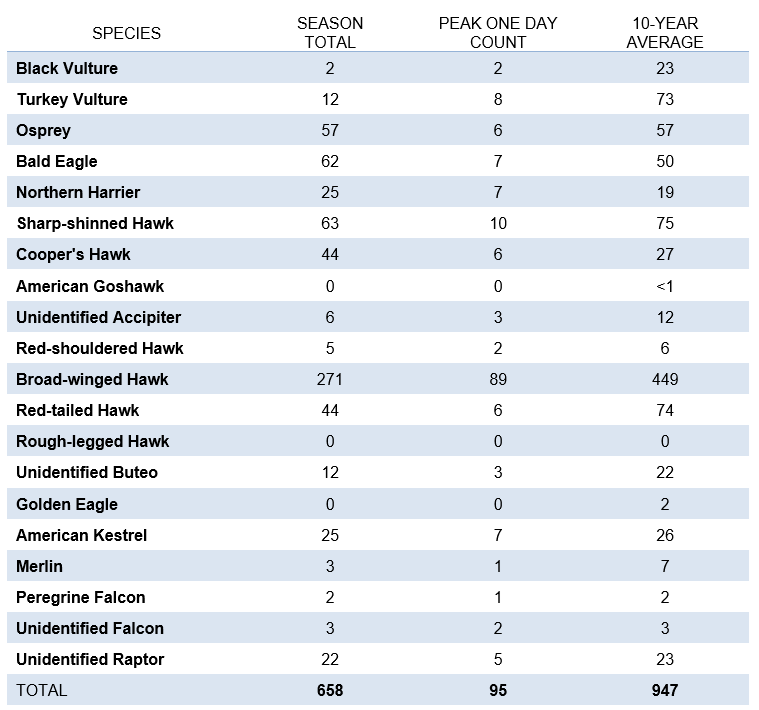
Hawk Mountain’s Spring Migration Hawkwatch officially ran from April 1 through May 15. This year’s count concluded with 658 migrating raptors of 14 species recorded, finishing 30% below the 10-year average.
The season ended on a gusty note on May 15 as north-northwest winds buffeted the mountain’s north slope, providing local vultures and red-tailed hawks with ideal soaring conditions. Despite the headwinds, three final migrants moved north past the lookout: an osprey, a bald eagle, and a red-tailed hawk, which became the final migrant of the 2026 spring count.
Weather overall was excellent for migrants moving north but is primarily responsible for the spring count coming in below average. An unusually warm period early in the season likely encouraged turkey vultures to move through the region earlier than normal, contributing to a count that finished 83% below their 10-year average. Broad-winged hawks, another highly weather-dependent species, finished 40% below average as sunny skies, light southerly winds, and strong thermals allowed migrants to disperse across the landscape rather than concentrate along the ridge. While periodic northerly winds can funnel migrants toward Hawk Mountain, many of those weather systems also brought rain that grounded birds and limited visible migration.
Several species exceeded their long-term averages this spring. Bald eagles finished 25% above average, northern harriers were 31% above average, and Cooper’s hawks posted the largest increase, coming in 62% above the 10-year average. Osprey, peregrine falcons, American kestrels, and unidentified falcons and raptors were all at or near their long-term averages. Merlin counts were down 57%, while red-tailed hawks finished 40% below average. Black vultures continued their trend of reduced migratory behavior, coming in 91% below average as the species continues to expand its breeding range farther north.
We thank the many visitors who joined the HMS staff, volunteers, and this spring’s Conservation Science Trainees on the lookout to witness migration in action. As the trainees shift their focus to monitoring local nesting raptors and collecting productivity data throughout the region, preparations are already underway for the fall migration season. We look forward to welcoming everyone back to the mountain in August.
Spring 2026 Raptor Migration Count