Chapter One: Soaring To A Dream
Posted on in In the Field by Tamara Russo, Spring 2022 Conservation Trainee
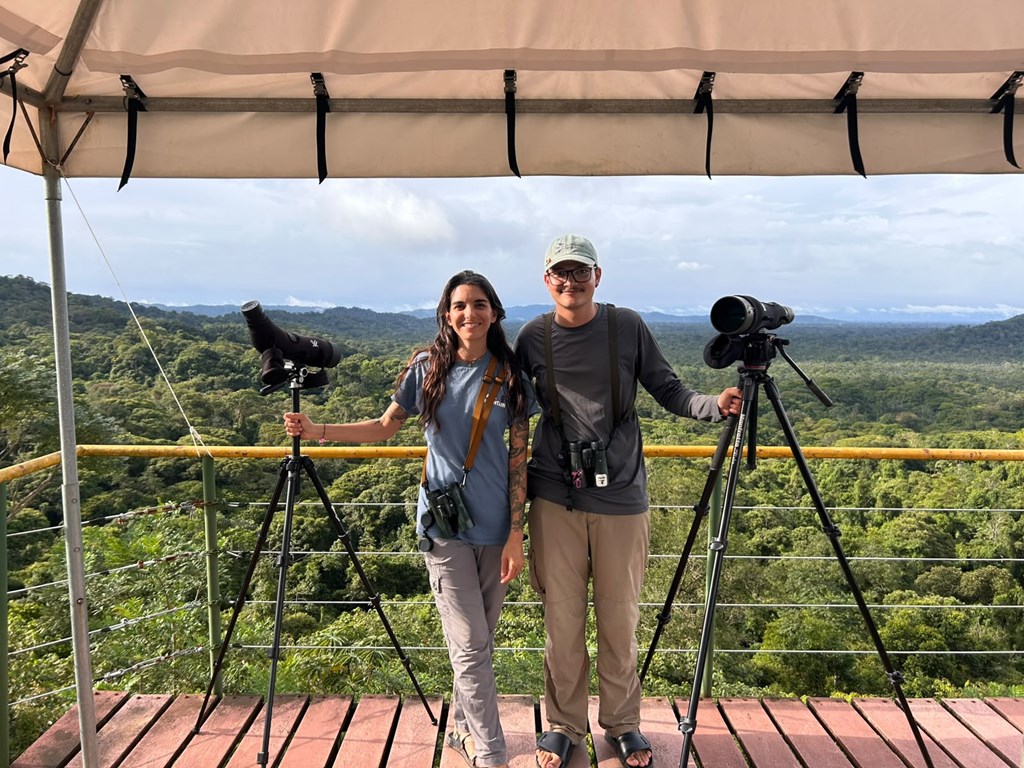
Some journeys begin long before we arrive. I have dreamed of this tropical forest for many years and finally, I arrived in Costa Rica last Saturday! My last few days have been wild: looking for my lifers among the common birds here and, whenever the rain lets us, going up the hill to the tower to count our beloved raptors!
I am a former trainee at Hawk Mountain Sanctuary. I did my traineeship there in 2022, learning about one of the longest histories of raptor migration conservation. Since that unforgettable spring, when I gained new knowledge, friendships, birds, and confidence, I have become a hawk counter at different sites across the continent, always carrying environmental education alongside the science of migration—what I like to think of as the second wing of conservation.
This dream is possible thanks to Hawk Mountain Sanctuary, which supported me with a Project Soar grant, and to the Lapa Verde Refuge team, who have welcomed me and received me like family.
The whole team at Lapa Verde Refuge has been incredibly kind. Jefferson Delgado is the coordinator of raptor monitoring. We met last year at the River of Raptors in Veracruz, and many times we talked about the idea of this reunion here. We are also happily waiting for our friend Aldo from Veracruz, who will be joining us for the count! It is very special to see how raptor migration strengthens the connections between hawkwatchers from different countries. At the tower, I also met Adan, who, at only nineteen years old, has already been counting raptors at this site since 2023.
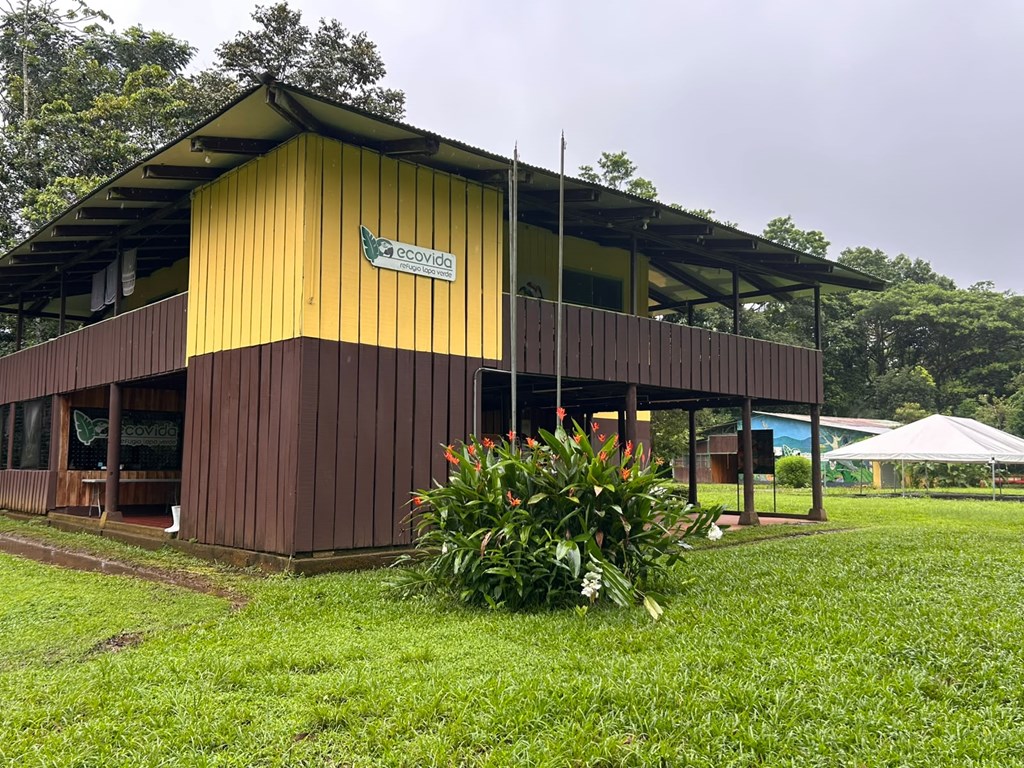
There is also a herpetology and amphibian team from Holland, so there are always fascinating things happening. I’m already learning about beautiful frogs and their connection to the phases of the moon! Our activities complement each other naturally: while they head into the field at night, I look up into the trees, hoping to catch a glimpse of the great Oropopo—the local name for the Spectacled Owl (Pulsatrix perspicillata).
I have always been passionate about plants and trees too, so walking through this tropical forest is a delight in itself. I’m discovering new bromeliads, orchids, and trees of astonishing size, as well as unfamiliar floral scents drifting through the forest. Everywhere I look, there is something new to notice.
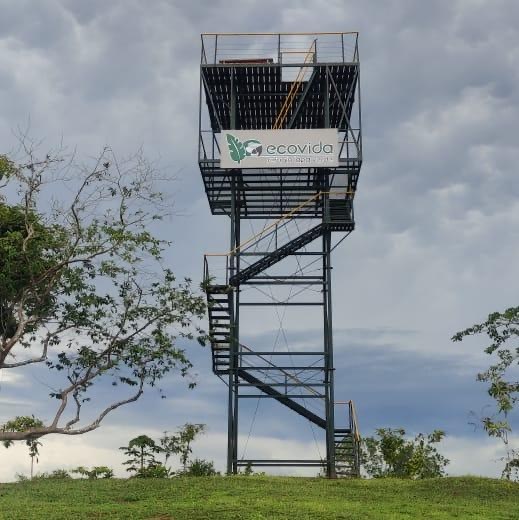
And then, at last, I saw the raptor tower. My heart began to race. My seasonal reunion with the raptors was only a few steps away.
The raptor tower is spectacular. It takes about twenty minutes to reach it from the refuge, following a forest trail where Red-capped manakins (Ceratopipra mentalis) jump through the trees, along with Blue Dacnis (Dacnis cayana), Golden-hooded Tanagers (Stilpnia larvata), Scarlet-rumped Tanagers (Ramphocelus pass erini), Rufous motmots (Baryphthengus martii), and the Snowy cotinga (Carpodectes nitidus). These are the first non-raptor birds that have made me stop and go “aaaaaww!” and there are so many more to find!
Where is the North?
That is always my first question when I arrive at a new migration site. Finding that direction marks the beginning of a ritual I have come to treasure. This annual reunion with the migrating raptors has become one of the greatest kinds of magic in my life.
From the tower, a green sea of trees endlessly covers the hills. And somewhere above that landscape, my challenge begins: learning to identify a whole new cast of raptors—the local birds I have dreamed of seeing for so long.
My first was the Double-toothed Kite (Harpagus bidentatus)—a lifer! They are much harder to see in Mexico, while here they seem to have a strong presence in the sky. My second raptor lifer was the Barred Hawk (Morphnarchus princeps), and it was so, so exciting! Suddenly I said, “Guys, please look! This looks like a Black Vulture, but a Buteo!” And they replied, “Oh! You just found the Barred Hawk!
I loved it.
The King Vultures (Sarcoramphus papa) are another reason I can’t stop smiling. There is something fascinating about having these extraordinary birds circling above us. And then there is the Great Green Macaw (Ara ambiguus), one of the many joys of this place. Its calls have already become my favorite echo of this forest.
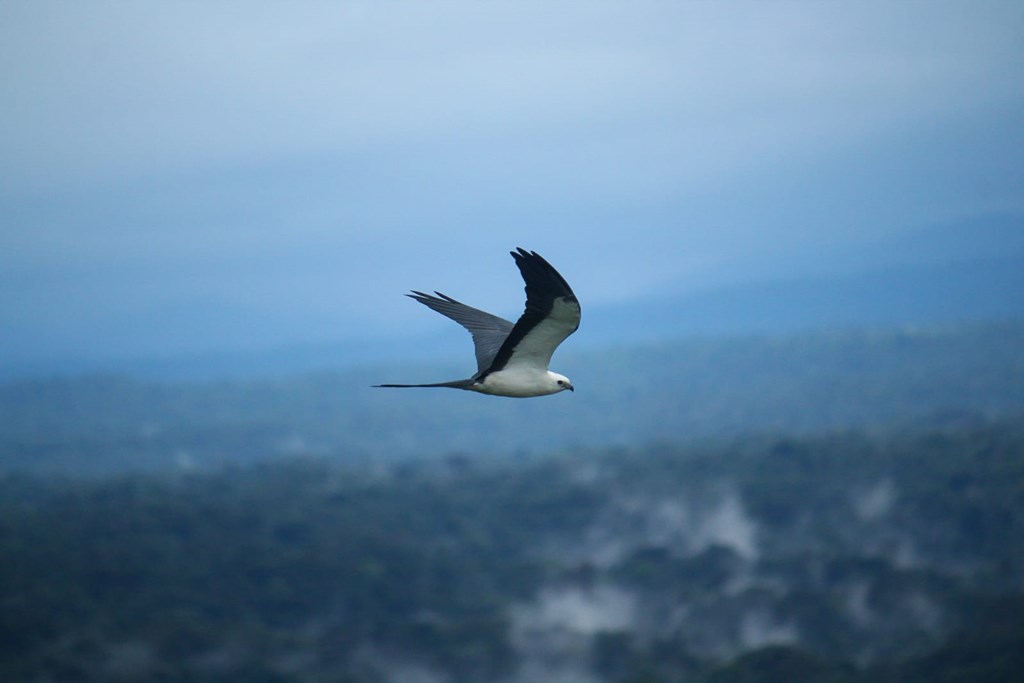
I’ve already started counting good numbers of Mississippi Kites (Ictinia mississippiensis), Swallow-tailed Kites (Elenoides forficatus), Ospreys (Pandion Haliaetus), and Plumbeous kites (Ictinia plumbea)—which is a new migratory raptor species for me. I’m hoping to see the magnificent Ornate Hawk-Eagle (Spizaetus ornatus) soon, which is regularly seen from the tower. So very soon, another dream will come true!
I’ll have soon my first meeting with David to talk about my environmental education activities. I feel very grateful for the opportunity to visit schools and communities in a new country and share my passion for birds. But I’m pretty sure they are going to teach me so much more!
Thank you so much for your support and for helping make this dream possible.