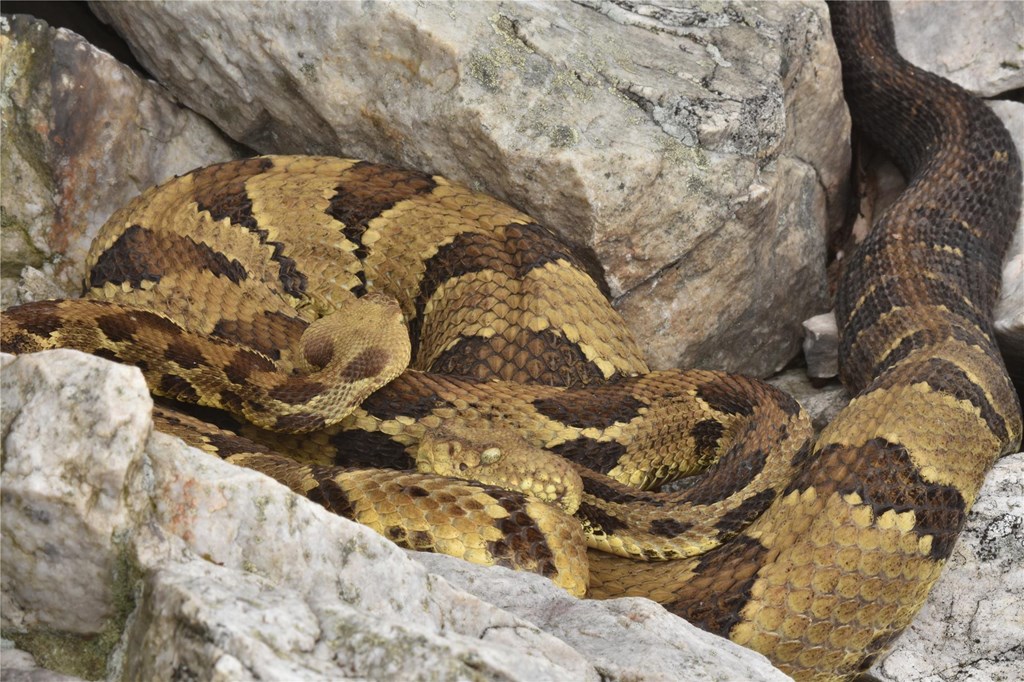
Rattlesnake Safety
Posted on in A Year in Stewardship by Anna Laughlin - Seasonal Sanctuary Steward/Invasive Species Specialist
When the weather starts to warm, you can expect to see all of life come back, including Timber Rattlesnakes. After their 6-month brumation, timber rattlesnakes flee their den in search of sun to regulate their body temperature. Rattlesnakes are active from late April/early May until mid-October. They are gone from the den all the warm season but will return to the same den when the end of fall is approaching.
Always on the move, rattlesnakes will periodically stop to hunt. Rattlesnakes will rest their head on a log or on themselves, ready to strike at the next prey that passes by. As they strike, they release venom into the prey and let them go. The prey will scurry off and eventually die. Utilizing their tongue to smell their way, rattlesnakes will track the prey down and enjoy a meal.
When enjoying the outdoors during the warm season, it is always important to understand the safety and awareness of the Timber rattlesnakes. In July and August, human and rattlesnake interactions increase as the male snakes are in search for a mate. Timber rattlesnakes are one of three venomous snakes in Pennsylvania. They can grow up to five feet and can be identified by their brown or black bands on top of a yellow to black coloration.
Whether its a walk in the woods or a trek over rocks, it is important to be aware of your surroundings. Rattlesnakes can be found in various locations throughout the woods. Timber rattlesnakes are docile and not want to cause harm. When in proximity of a snake, they will most likely give you a heads up with a warning rattle. It is crucial to freeze, locate the snake, and back away. Do not attempt to pick up the snake, even if it appears dead. When rattlesnakes are cornered, threatened, or touched, they are more likely to strike, even without a warning. Make sure to look around before you take a seat or reach under logs or brush.
In the rare case of a rattlesnake bite, it is crucial to act fast. Keep in mind, timber rattlesnakes are venomous. Adult snakes may give a ‘dry bite’ where they do not release any venom. However, it is still urgent to seek medical attention quickly. Do not apply a tourniquet or suction to the bite. Remove any jewelry or anything tight as swelling will occur.
As I am finishing up my second season at Hawk Mountain, my interest and respect for timber rattlesnakes continues to grow. Before my time here, any snake close by had me running the other way. I was always under the impression that snakes are scary and wanted to hurt you. Turns out, that is far from the truth.